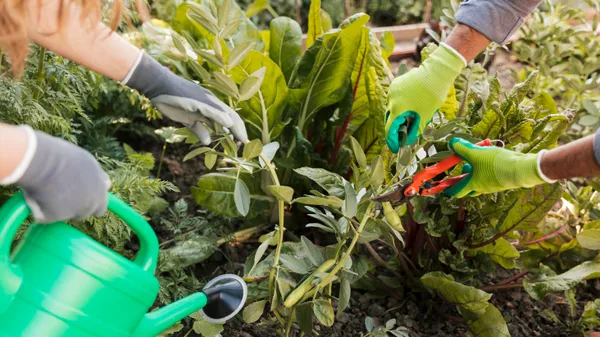
Man and woman doing edible container gardening, Freepik.
The concept of companion planting is particularly effective in urban gardening, particularly for small space apartments. There are several benefits in growing on the balcony a variety of plants in containers, pots, and raised beds.
Companion planting is a gardening practice that emphasises the natural relationships between different plants. By strategically pairing herbs, vegetables, and flowers, we can create a thriving mini-ecosystem where balcony plants support each other’s growth, repel pests, and even improve flavour. Some plants may make excellent neighbours, enhancing each other’s health and productivity, while others can compete for nutrients or attract unwanted pests when grown together.
In this post, we’ll explore some of the best companion planting combinations that allow you to grow vegetables in your small-space productive balcony oasis. These pairings will make your green space more resilient and abundant.
Vegetables and herbs for companion planting
For instance, try planting cucumbers that will flourish alongside basil, as this herb naturally deter common pests. Similarly, marigolds can be a great companion for carrots, as they help keep carrot flies away.
Certain species work well together, while others can suffer from forced companionship. Look out for good and bad plant pairings. Understanding these beneficial pairings can help you make the most of your limited balcony space, ensuring not only that your plants grow well but also thrive.
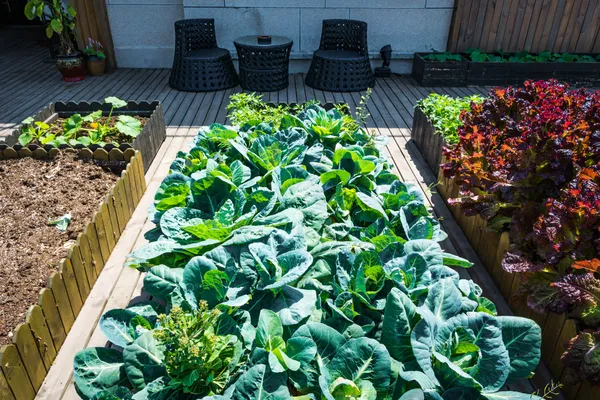
Edible garden in raised beds, Freepik.
Permaculture for a productive balcony garden
Permaculture entails a sustainable design system that mimics natural ecosystems for long-term resilience and productivity.One of its core ideas is plant relationships, where different species support one another — this is exactly what companion planting does.
Nonetheless, permaculture takes it a step further by integrating these relationships into a holistic system. Instead of just pairing two plants together for mutual benefit, it encourages guild planting — a more complex form of companion planting where plants work together with beneficial insects in a symbiotic network. For example, nitrogen-fixing legumes are paired with heavy feeders like tomatoes. This method reduces the need for synthetic fertilisers and enhances soil health in potted plants.
Permaculture will help you use companion planting on your balcony to create a self-sustaining and productive balcony garden that thrives with minimal intervention. This approach not only supports plant health but also contributes to a more regenerative and environmentally friendly way of gardening.
Another important permaculture technique makes use of trap crops and natural pest deterrents. Certain trailing plants like nasturtiums, attract aphids away from more vulnerable crops, while aromatic herbs such as oregano and thyme can deter common pests. By carefully selecting plant companions, we can minimise the need for chemical pesticides, making our balcony garden more eco-friendly.
Permaculture also promotes biodiversity, which is essential for a healthy, thriving garden. Intercropping vegetables and flowers like marigolds and calendula not only adds beauty to our space but also attracts pollinators, which help increase crop production. Additionally, vertical gardening techniques — such as growing beans or cucumbers using raised beds and trellises to climb — maximise space and create microclimates that benefit as many plants as possible.
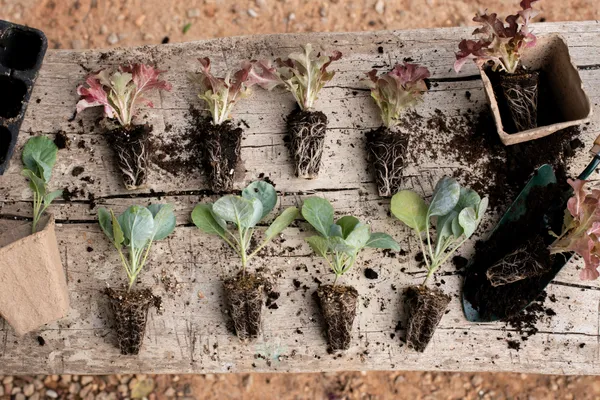
Tiny plants of lettuce and green leaf salad, Freepik.
Choose the right plants for your small space veranda
In a permaculture-inspired small balcony garden, every species serve multiple functions — whether deterring pests, attracting bees and other pollinators, or improving soil health. For example, you'll want to include tomatoes and basil:basil provides leaves for cooking, repels pests like mosquitoes and aphids, and enhances the flavour of nearby tomatoes. Similarly, nasturtiums offer edible flowers and leaves while promoting pollination and acting as a trap crop for aphids.
Look for plants for your balcony that ensure that your garden remains productive, visually appealing, and easy to maintain over time. The key is to choose plants that flourish in your balcony’s specific growing conditions, such as container size, sunlight and wind exposure.
Consider starting tomatoes and lettuce plants indoors, especially if you have a short growing season or unpredictable weather. Remember to harden off seedlings before transplanting: gradually expose them to outside temperatures, wind, and sunlight to help them adjust.
Best edible plant pairings based on container size
Choose the right size for a great balcony garden. Some species require deep soil for root development, while others thrive in shallow or compact spaces. Permaculture principles and companion planting can help you make the most of every pot, reducing pest issues and improving overall plant health.
Small planters (under 15 cm deep): herbs & quick-growing greens
Small pots are ideal for herbs with shallow roots and leafy greens. Use small pots for fast-growing crops andsuccession planting — this strategy gives you the time to harvest one crop and immediately plant another. These plants are easy to grow quickly and don’t require deep soil.
Best pairings:
- lettuce + chives + marigolds
- arugula + parsley + calendula
- radishes + carrots (baby varieties) + rosemary
- microgreens + basil + nasturtiums
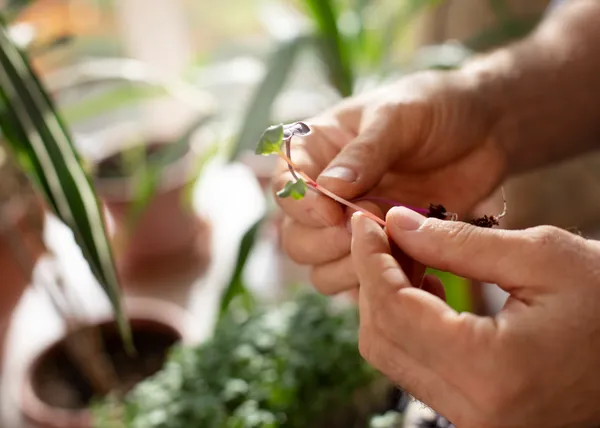
Man holding microgreen seedling, Freepik.
Medium pots (15-30 cm deep): compact vegetables & herbs
Medium-size planters are ideal to grow well together bush-style vegetables and herbs, and companion flowers. They provide enough space for small root systems and vertical growth. Additionally, medium-sized pots can be stacked in tiers to create a multi-level growing system, making the most of limited space.
Best pairings:
- spinach + mint + nasturtiums
- bush beans + oregano + marigolds
- Swiss chard + garlic + thyme
- peppers + basil + majoram
Large planters (30-45 cm deep): fruiting vegetables & root crops
Larger pots are essential for deep-rooted vegetables and plants that require more nutrients and stability. Bear in mind that they retain moisture better and allow for guild planting — grouping plants with complementary needs in one pot.
Best pairings:
- tomatoes + basil + marigolds
- cucumbers + dill + nasturtiums
- carrots + radishes + cilantro
- strawberries + thyme + borage
Extra-large pots (45+ cm deep): mini food forests & jasmine vines
Deep pots are perfect for small fruit trees, climbing plants, and multi-layered companion planting systems. Usevertical structures (trellises, stakes, cages, or balcony railings) to support vines and maximise space efficiency.
Best pairings:
- dwarf citrus tree + lavender + nasturtiums
- dwarf tomatoes + basil + oregano + marigolds
- pole beans + peas + squash (mini varieties)
- blueberries + thyme + chamomile
- jasmine + spinach + cilantro
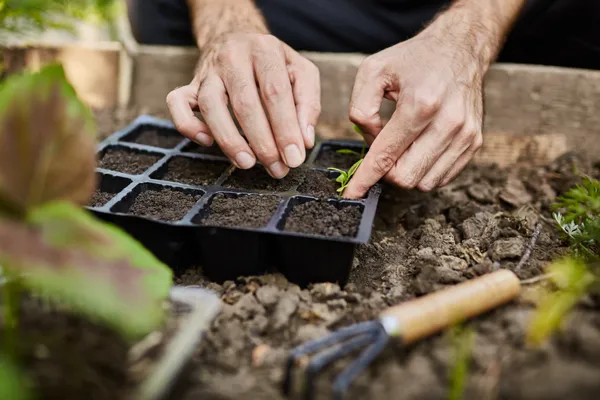
Man planting seedling into raised bed, Freepik.
Best edible plant pairings for different balcony sunlight conditions
The amount of sunlight hitting your balcony plays a crucial role in determining which plants will thrive. By pairing the right plants for your balcony’s sunlight conditions, you’ll create a thriving edible ecosystem that supports biodiversity, minimises pests naturally, and maximises crop yield!
Full Sun balcony (6+ hours of direct sunlight daily): cucumbers in raised beds
A sunny balcony is perfect for fruiting vegetables, Mediterranean herbs, and Sun-loving flowers. Use tall plants like tomatoes and peppers to provide shade for heat-sensitive crops like spinach.
Best pairings:
- tomatoes + basil + marigolds
- cucumbers + dill + nasturtiums
- peppers + oregano + chives
- strawberries + thyme + borage
Partial Sun / partial shade balcony (3-6 hours of sunlight daily)
A balcony with four to six hours of sunlight daily is great for leafy greens, root vegetables, and shade-tolerant herbs. Implement light-coloured pots and reflective surfaces to increase light for plants in partially shaded areas.
Best pairings:
- lettuce + chives + marigolds
- kale + mint + nasturtiums
- radishes + carrots + oregano
- Swiss chard + garlic + lavender
Full shade balcony (less than 3 hours of direct sunlight daily / bright indirect light)
A garden without consistent sunlight still allows you to grow shade-tolerant greens, herbs, and mushrooms. Use hanging baskets or wall-mounted planters to maximise space in shaded areas, keeping shade-loving herbs and greens within reach.
Best pairings:
- spinach + chives + chamomile
- lettuce + cilantro + marigolds
- mushrooms + mint + ferns
- arugula + parsley + calendula
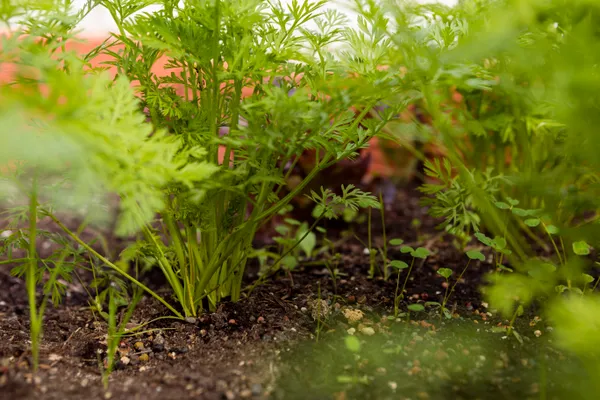
Close-up of fennel plants in soil, Freepik.
Best edible plants for your balcony based on wind exposure
Wind exposure can significantly impact the success of your balcony garden. Strong winds can dry out soil, damage delicate plants, and stress growth, while sheltered balconies may suffer from poor air circulation, leading to fungal issues and pests. By using companion planting and permaculture principles, you can create a more resilient, wind-adapted garden.
High-wind balconies: sturdy, wind-resistant plants & protective pairings
Exposed balconies, especially on high floors or open spaces, face constant wind stress. Choose wind-tolerant plants with strong stems, compact growth, or flexible foliage. Use tall, sturdy plants (like lavender or bamboo) as windbreaksto shield delicate plants.
Best pairings:
- rosemary + thyme + marigolds
- kale + chives + nasturtiums
- peppers + oregano + basil
- dwarf tomatoes + sage + borage
Moderate wind balconies: flexible, resilient plants
Balconies with occasional gusts or seasonal winds need a combination of flexible plants that can bend without breaking. Place plants in clusters rather than rows to protect your plants from wind tunnels and create a natural buffer.
Best pairings:
- bush beans + carrots + nasturtiums
- strawberries + lavender + thyme
- cucumbers (bush variety) + dill + calendula
Low-wind balconies: air-circulating plants to prevent mould & pests
Sheltered balconies can trap humidity, which might lead to root rot, fungal issues and poor pollination. Use hanging pots or vertical gardens to improve airflow and drainage.
Best plant pairings:
- basil + tomatoes + marigolds
- Swiss chard + garlic + thyme
- arugula + cilantro + chamomile
- blueberries + sage + borage
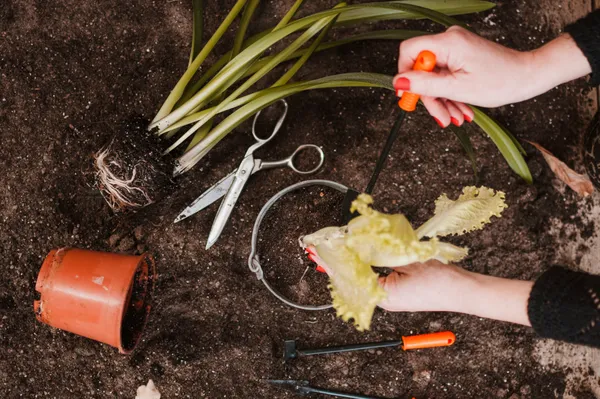
Woman tranplanting lettuce, Freepik.
Best flower balcony plants for pollinators
The pollination process is crucial for fruiting plants and healthy yields. Certain plants naturally attract bees and butterflies, while others act as companion plants to boost pollination efficiency. Combine edible species with flowers and herbs to create a thriving ecosystem.
Pairings that promote pollination:
- tomatoes + basil + marigolds
- cucumbers + borage + lavender
- strawberries + thyme + calendula
- squash + sunflowers + nasturtiums
- beans + sweet alyssum + zinnias
- peppers + petunias + borage
- mint + fennel + lavender
Create a pollinator-friendly environment
To encourage pollination on your balcony, consider the following:
- Plant a mix of native flowers, herbs, and fruiting vegetables to have a biodiverse garden throughout the growing season. There will always be some veggie ready to harvest for you!
- Ensure there is always something blooming on your balcony to provide a continuous food source for the set of beneficial insects you need.
- Pollinators need water sources to hydrate and shelter for nesting. Add small spots with water to your balcony.
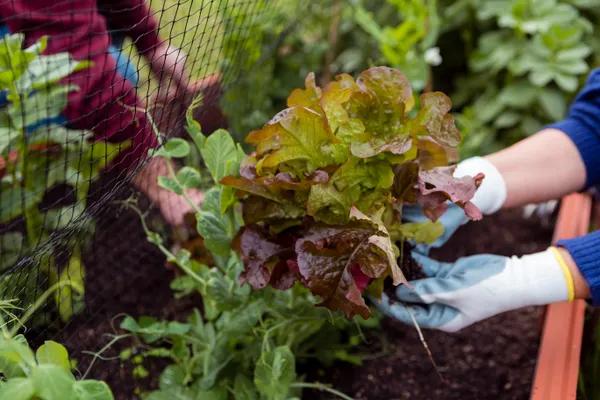
Woman and man doing edible container gardening, Freepik.
Pest control in container gardening
In container gardens, managing pests is a crucial aspect of preserving plant health. Without the natural predators and ecosystem balance that larger garden spaces might offer, pots can be especially susceptible to infestations.
Companion planting can play an important role in pest management. Combining plants in specific ways can help get rid of pests naturally, reducing the need for chemical pesticides that harm beneficial insects. Certain plants can repel pests like aphids and attract beneficial insects. For instance, dill attracts beneficial insects like ladybugs and hoverflies that feed on cucumber beetles. Or again, sage has a strong fragrance that keeps the cabbage moth away.
Here are some good options when it comes to companion planting to deter pests naturally:
- tomatoes + basil
- marigolds + peppers
- carrots + onions
- cabbage + sage
- beans + marigolds
- cucumbers + dill
- lettuce + marigolds
- garlic + roses
- spinach + strawberries
- nasturtiums + tomatoes
Grow vegetables in your balcony garden
The principles of urban agriculture and permaculture align perfectly with balcony gardening. Companion planting embraces these principles by creating a self-sustaining, harmonious environment that reduces the need for external inputs, such as chemical fertilisers and pesticides. The best choice is selecting plants that benefit one another — whether it’s through pest control, nutrient sharing, or promoting pollination — not only when growing plants for food on your balcony, but also when contributing to the greater health of your local ecosystem.
Companion planting offers a wealth of benefits, especially when applied to a vegetable garden, where space is limited, and every square inch counts. The beauty of companion planting lies in its flexibility. Each balcony garden is unique! You are officially ready to turn your balcony in a sustainable and productive space, while experimenting with different plant combinations to discover what works best for either your rooftop, veranda, balcony or patio.