
Green wall, Freepik.
A DIY vertical garden offers the perfect addition to any outdoor space in today’s urban environments, where every inch counts. This blog post will explore DIY projects to build a simple vertical garden structure, while sharing a set of innovative design ideas to enhance our balcony or veranda. Whether we dream of fresh herbs at our fingertips, or a privacy screen, a vertical garden lets us maximise greenery without sacrificing floor space.
Advantages of vertical gardening in small spaces
Living in the city often means limited space for gardening. But to make a vertical garden means transforming bare walls into vibrant, productive areas. Even a tiny balcony can become a mini oasis, bursting with herbs, flowers, and climbing plants. In fact, vertical gardens are not only aesthetically pleasing. The benefits of vertical arrangements are multiple.
Plant herbs for cleaner air
There is something special about stepping outside and breathing in the fresh scent of basil, mint, or lavender. Not only these herbs enhance our living space with a combination of invigorating and calming scents, but also release natural antimicrobial properties that help purify the air. While their air-cleansing effects are definitely more pronounced indoors, eucalyptus and lavender are among the plants we want to consider
For an even greater impact, we can mix aromatic plants with larger, leafy vegetation. According to the US Department of Agriculture, larger plants and trees help trap particulate matter and absorb gaseous pollutants through their leaves, increasing oxygen levels in our surroundings.
DIY vertical garden for noise reduction
If we live in a busy area, our vertical garden can act as a natural noise barrier. Dense greenery absorbs ambient sound, helping to reduce street noise and create a more peaceful environment. The trick? Avoid any air cavities or resonators — continuous, thick layers of plants work best!

Purple flower climbing plant on wall, Freepik.
Build a vertical garden for privacy
Thanks to a vertical garden structure, we can create a visual screen. By carefully selecting plant species, we can achieve just the right amount of privacy in our balcony or veranda.
Plant a flower garden for pollination
Allowing herbs like and rosemary to flower will attract bees, butterflies, and other pollinators. This not only benefits our garden but also supports urban biodiversity. For example, basil thrives outdoors in spring and summer. By cultivating a variety of flowering herbs, we can create an inviting habitat that supports the local pollinator populations, which are vital for biodiversity.
Vertical garden wall DIY projects
Now that we know the benefits, let’s get hands-on! When it comes to DIY vertical garden ideas, the possibilities vary greatly and can all be customised to suit our small space. Here’s a step-by-step tutorial to creating a stunning and practical vertical garden, describing everything you need to know to build a great vertical garden.
Step 1
We have several options when it comes to the base of our vertical garden. First, let's look around — do we already have a wall of fence that could use some greenery? Perfect! Then, we do have some garden blocks or retaining walls that would make a sturdy foundation for growing plants.
If not, no worries. We can easily unroll a net or chicken wire to vertically construct our wall or fence. NB: we need a our wall to be strong enough to hold gutter planters filled with soil and plant brackets.
We can also repurpose wooden pallets, which already come pressure-treated. Or even, adopt an old structure like a ladder, which naturally offer the perfect shape to host a vertical garden. Vertical stack planters represent a particularly cheap and easy option otherwise.
When creating a vertical garden, no matter which structure we choose, it’s best to make it easy to move from the patio to an interior environment during extreme weather. We want to equally be able to change the orientation of our planters and make replanting easy in the future.
Step 2
Once the wall is built, we can fix our troughs using pre-drill holes, screws and lag bolts for extra support.
We need to decide on the best pots for our plants now. Terra cotta pots are a great choice — they’re long-lasting, eco-friendly, and help regulate moisture, as compared to pots made of plastic. Let's make an informed decision!
We can either buy new or deploy recycled materials to make a great green wall. We can use denim or mason jars to make garden planters for instance.
Step 3
Keeping a vertical garden hydrated can be tricky, but here are some irrigation system solutions. We can conveniently install a retractable hose reel. If we don’t have direct access to a water source, a drip hydroponic system can be an excellent option, allowing us to recirculate water and fertiliser.
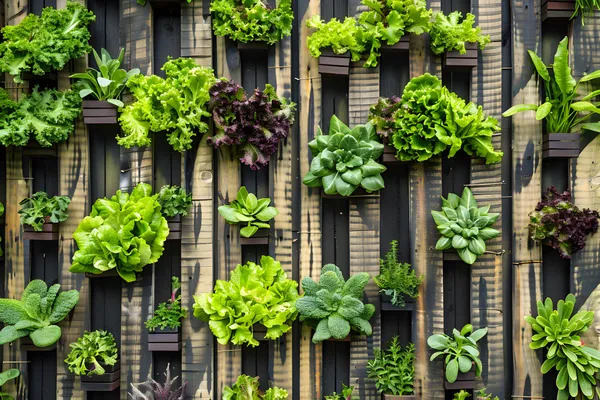
Lettuces on vertical garden wall, Freepik.
Best plants for a DIY vertical garden
It is important we pick the right soil and plants for a thriving vertical garden. Notably, we need to consider the sunlight and water requirements of our plant selection.
- Hang baskets of aromatic plants for a scented ambience, while giving a fresh touch to your cooking.
- Incorporate non-edible plants like climbing vines (ivy, jasmine, honeysuckle) or dense foliage for a fast-growing natural screen.
- Embellish retaining walls by accommodating a variety of succulents or plants that will overhang. Such plants will add depth and texture to your landscape, keeping your garden wall will captivating all year round.
- Use cedar wood raised beds to grow melons and cucumbers. If growing organic, make sure the plants are installed away from each other: they belong to the Cucurbitaceae family and can be attacked by the same kind of pest. Planting them 2″ apart will be of little help. As the plants grow, use trellis to promote crop production and facilitate the harvesting process.
Small space vertical planter in a urban setting
Building a DIY vertical garden wall is an exciting and rewarding project that can significantly enhance our balcony or veranda. By combining sustainable design ideas with practical landscaping techniques, we can create a beautiful and functional area in urban environments. Whether we are growing edible plants or simply enjoying the aesthetic appeal of a living wall, the benefits of this gardening approach are numerous. Let's surround ourselves with greenery, as we actively transform our surroundings, starting from our own home!

Succulent green wall, Freepik.